Plant Medicine and Psychedelics for Addiction Recovery and Healing
The conversation around psychedelics for addiction recovery is evolving but there are still many common misunderstandings.
In many recovery spaces, especially traditional 12-step programs, the idea of using psychedelics or plant medicines can be met with fear, judgment, or outright rejection. To some, it’s automatically seen as a relapse. To others, it’s viewed as a dangerous or irresponsible “slippery slope.” And yet, for a growing number of people, psychedelics in recovery have been a powerful, life-changing tool for healing, insight, and forward movement.
We don’t believe plant medicine is for everyone. But we do believe the conversation deserves more nuance, compassion, and honesty.
Sign up to our email list to get information on future plant-medicine healing retreats and events. Continue reading below!
Alcoholics Anonymous Came From An Advocate of Psychedelics for Recovery
Bill Wilson, co-founder of Alcoholics Anonymous (AA), is often remembered as a champion of addiction recovery through sobriety, connection to a higher power, and fellowship. What is less commonly discussed is that Bill W. was also deeply curious about altered states of consciousness and the potential role of psychedelics for addiction recovery and healing. The history of AA is incomplete without this included.
Before AA was founded, Wilson experienced a profound spiritual awakening while hospitalized for alcoholism in 1934. During that time, he was giving the Towns-Lambert treatment, with drugs administered from the Belladonna (Atropa belladonna) and Henbane (Hyoscyamus niger) plants. These poison nightshade-based treatments were used in some hospitals in the early 20th century to induce intense visionary experiences believed to interrupt addictive patterns (aka “a trip”). Wilson later described his hospital experience as mystical and life-altering, one that helped catalyze the spiritual principles that would eventually become the foundation of Alcoholics Anonymous. I read once that they kept him tripping in the hospital on belladonna for over 50 hours.
Decades later, in the 1950s, Wilson again explored altered states — this time through LSD, under the guidance of therapists and researchers who were studying its therapeutic potential. Wilson believed LSD could reliably produce a “spiritual experience” similar to the one that helped him get sober. He felt that such experiences might help alcoholics who struggled to access the spiritual awakening described in AA’s literature. In the 1960s, Bill W. publicly recommended LSD therapy for people suffering from addiction, but received pushback from other fellowship leaders who viewed the substance negatively due to its association with the growing “hippie” movement.
Bill Wilson did not see psychedelics as a replacement for the Twelve Steps or a daily surrender to sobriety. Rather, he viewed LSD as a treatment that could work with the 12 Steps, the psychedelics as tools that could help some people open to humility, connection, and a sense of something greater than themselves. His views were controversial, even within AA leadership, and he ultimately stepped back from advocating publicly for LSD in order to protect the fellowship’s unity.
Still, Wilson’s story reminds us that recovery has never been one-size-fits-all. From Belladonna hospital treatments to carefully-guided LSD sessions, the roots of AA are more intertwined with plant medicine and altered states than many realize. We believe this invites an ongoing conversation about spirituality, healing, and how we even define sobriety and recovery.
Harm Reduction Matters More Than Dogma
I’ve seen harm done in the name of “sobriety.”
I once heard a story about a woman in recovery who used CBD—no THC, no intoxicating effect. Her sponsor told her she was no longer sober. Disheartened by this rejection from her sponsor, she relapsed back into opioid use. I’ve also known people whose sponsors required them to reset their sobriety date after participating in an ayahuasca ceremony, even though that ceremony was deeply intentional, ceremonial, and non-recreational.
This is where harm reduction needs to come into the conversation.
What’s more harmful: a non-intoxicating plant extract or a return to life-threatening substance use due to feelings of shame and rejection by one’s recovery community? A ceremonial experience aimed at healing trauma, or a relapse that could end someone’s life?
What often gets lost is intention. No one drinks ayahuasca to “get fucked up.” Anyone who’s done it knows that it’s hard work. It’s confronting. It’s uncomfortable. It’s often humbling. It sometimes feels very good but it’s definitely not a party drug.
My Own Experience with Cannabis and Recovery – it’s all about intention
After I broke my ankle in 2022, I was faced with three choices:
Live in terrible, unmanageable pain.
Take prescription opioids.
Use cannabis products that included THC.
For me, the choice was clear. Without cannabis, I wouldn’t have been able to function or I could have easily become addicted to pain pills. Using THC wasn’t about escape. It was about avoiding a far greater risk. I wasn’t using it with the intention of getting a buzz. I was using it to survive in a better way.
This is where blanket rules about sobriety can fall apart. Recovery isn’t one-size-fits-all and what keeps one person safe may endanger another.

Privilege, Prescription Drugs, and Judgment
Another uncomfortable truth: many people in recovery take prescription medications like Adderall or Xanax (prescribed by a doctor) and are considered “sober.” Meanwhile, someone else might be judged for using plant medicine for similar anxiety or ADHD symptoms.
That judgment often comes from a place of privilege.
Not everyone in the United States can afford consistent medical care. Not everyone can see a psychiatrist or get prescriptions filled safely and legally. For some people, the only alternative to self-medicating with a plant is the liquor store or heroin dealer.
Context matters. Access matters. Compassion matters.
When Plant Medicine Is (and Isn’t) Helpful
It’s important to say this clearly: plant medicine is not right for everyone.
Some plants can be medicine or poison depending on dosage, context, and your personal history with substances. While I don’t believe someone would ever relapse from Ayahuasca itself, other medicines, like cannabis or kratom, can be complicated for people depending on their relationship with those plants.
That doesn’t make them “bad.” It means discernment is required.
Psychedelics and Feeling “Stuck” in Recovery
One place where psychedelics in recovery seem especially helpful is for people who feel stuck.
They’ve been sober for years.
They’re doing “all the right things.”
But something isn’t moving.
Old patterns persist.
They are out of ideas.
As Bill W. believed, therapeutic psychadelics can open up a spiritual experience to those who are struggling with their spiritual life.
Many people describe a plant medicine ceremony as feeling like years of therapy compressed into a single experience. Not because it magically fixes anything (it can), but because it reveals what needs attention. It shows you into parts of yourself that you for some reason don’t go, and shows you in a way that is loving, compassionate, and forgiving.
From a neuroscience perspective, many psychedelic medicines greatly increase our brain’s neuroplasticity. As we age, our brains become more rigid. Thoughts follow familiar, deep grooves that they have followed for many years. Because of this, trauma responses become automatic.
Psychedelics can temporarily “knock the train off the tracks,” allowing thoughts to move in new directions. In the days and weeks following a ceremony, there’s an opportunity to consciously fill the mind with healthier patterns—essentially retraining the brain.
Integration matters. Without it, insight fades. With it, real change becomes possible.
Useful Plant Medicines & Psychedelics for Addiction Recovery
Some of the plant medicines people explore in recovery include:
Ayahuasca – Deep emotional and spiritual healing. Offered in several countries where it is legal, or through special church organizations in the US.
San Pedro (Wachuma) or Peyote – Heart-opening, grounding.
Psilocybin mushrooms – Microdosing or macrodosing (generally considered very safe when used responsibly). Legal in Colorado and several other US states.
Ibogaine – Can interrupt opioid addiction patterns (requires extreme caution and medical supervision). There are clinics in Mexico.
DMT – Profound but brief non-ordinary states. Can be very spiritual.
Kambo – Physical cleansing and immune support. Exists in a legal gray area so you can find administrators in the United States.
Cannabis – THC, CBD, or both, depending on the person. Legal in many states.
Kratom – Sometimes used to transition off opioids but also CAN be addictive itself. Federally legal in USA.
Cacao – Not necessarily psychedelic but a powerful heart-opening medicine. It’s a great replacement for other morning drinks that many of us are addicted to (like coffee). It’s the raw form of chocolate.
Again, none of these are universally appropriate. Guidance, preparation, and integration are essential. Interestingly enough, no one except the craziest of shamans even touch Belladonna these days. Bill W was intense.
Non-Plant Medicines Gaining Popularity in Psychedelic Recovery and Healing
There are also non-plant substances increasingly used therapeutically:
Ketamine – Micro or macro dosed, prescribed by a doctor, creates neuroplasticity. Legally administered in clinics in the USA and can be prescribed online. Has potential for abuse so is not appropriate for every person.
LSD – Micro or macro dosed. Illegal in USA and almost everywhere.
MDMA – Especially good for trauma work. Illegal most places. MAPs is leading the effort to legalize for therapy. Has some neurotoxicity when overused.
These medicines aren’t about escapism! They’re about healing and can be used intentionally and safely.
Letting Go of Judgment in Recovery.
Everyone’s healing path is different. Telling someone they’re “doing recovery wrong” because their path doesn’t match yours is often projection. What worked for you may not work for someone else and insisting otherwise can cause real harm. Supporting plant medicine for addiction recovery doesn’t mean abandoning responsibility or boundaries. It means acknowledging complexity. It means valuing harm reduction over rigid ideology. It means trusting adults to make informed, intentional choices about their healing. Alcohol is what was destroying my life. As long as I am sober from alcohol, I consider myself sober, and I have been now for 7 years! Sometimes I use the term “alcohol-free” instead to be more specific when talking with other people in recovery. For the first few years of my recovery I did not use plant medicines either. Since reintroducing them with intention, I have only felt more sure and confident about my sobriety from alcohol. My journey with the plants takes me further and further from a drink, never closer.
Recovery, in my point of view, is not about dogma.
It’s about honesty.
It’s about growth.
Often, it’s about staying alive. Worrying too much about the stigmas of this or that, what is medicine, what’s a drug, what’s ok for those in recovery, what’s not?… That holds us back. Ultimately, YOU get to decide what is right for you.
If plant medicine genuinely helps someone then it deserves respect, not judgment.
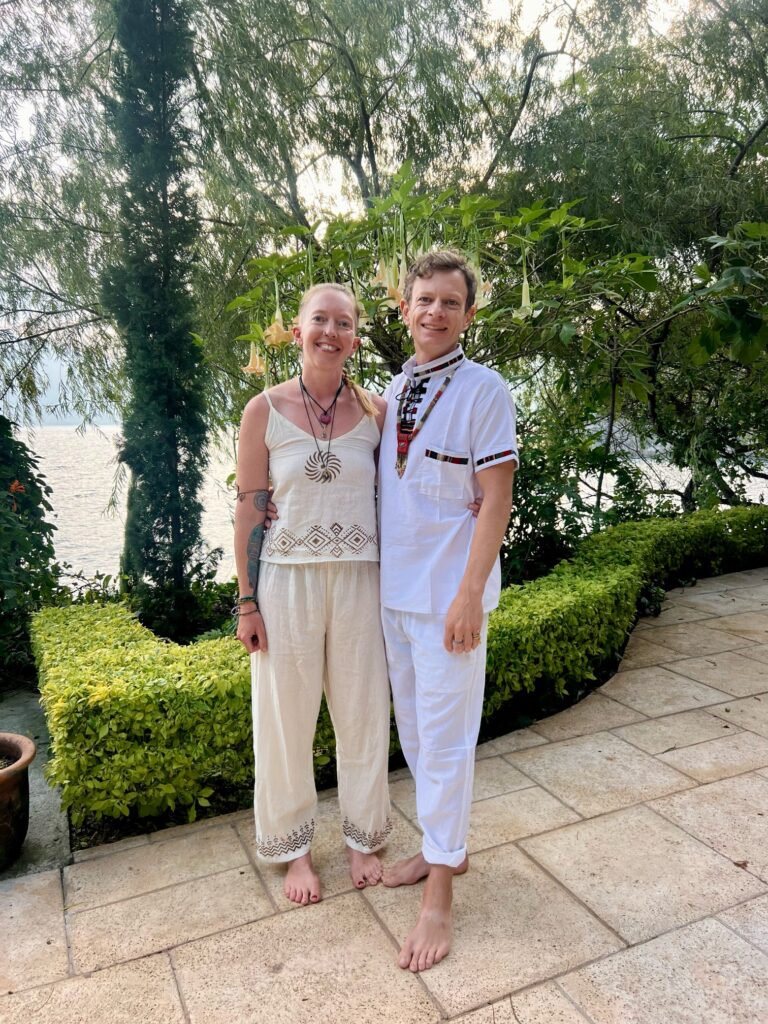
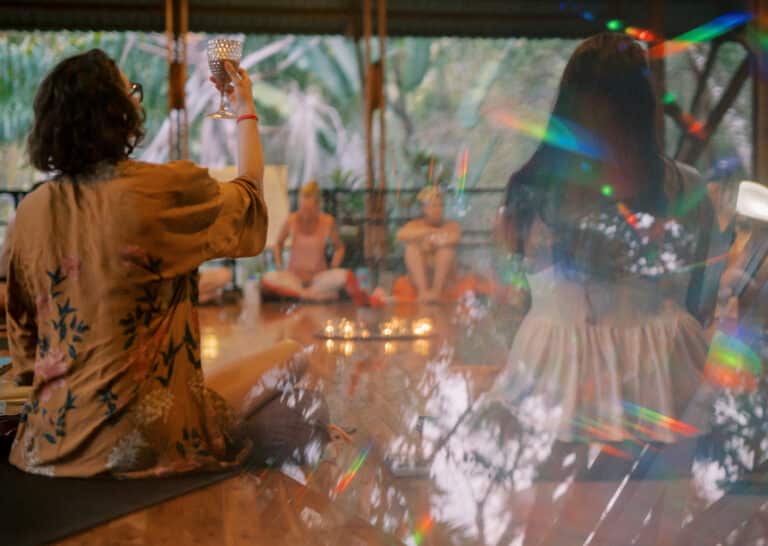
If this resonates with you, we offer healing retreats in Guatemala with the plant-medicine Ayahuasca. If you are interested in a different psychedelic medicine for your recovery, let us know! We might be able to point you in the right direction for finding a practitioner or ceremony.
Other resources:
There are Psychedelics In Recovery meetings online. They are a 12-step group that is open to those who use psychedelics in their recovery.
Our next Guatemala Plant Medicine For Recovery Retreat: January 23-28, 2027 in San Marcos La Laguna, Lake Atitlán, Guatemala. We provide help with flights and shuttles to the location, plus local cultural experiences and adventures around the retreat as well.