Rishikesh – The Yoga Capital of India and Maybe the World

We arrived in Rishikesh, India, and are enjoying walking the streets, looking at what’s around, and doing some shopping. Rishikesh, known as the yoga center of the world, is full of all types of people on different paths of life. There are a lot of westerners here to attend yoga schools, and many Indian tourists from Delhi and other big cities who enjoy the more peaceful atmosphere of the Himalayan foothills. Carrie originally tried to do her yoga teacher training (YTT200) there in 2018, but it didn’t work out and she ended up doing the training in Sri Lanka instead.
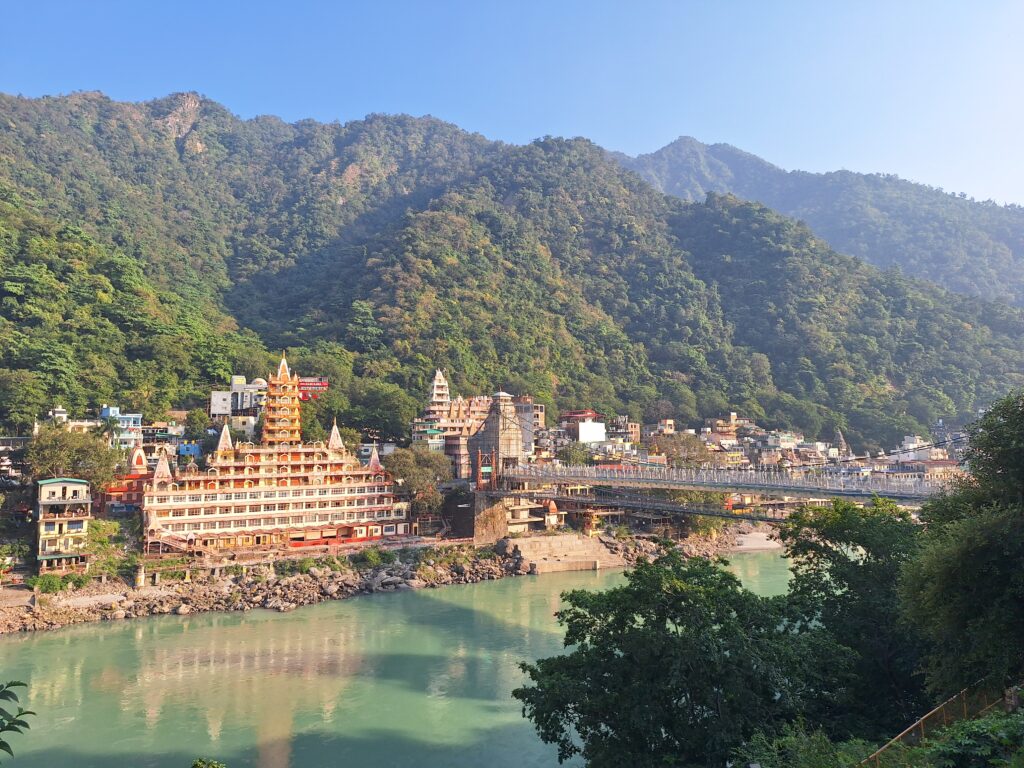
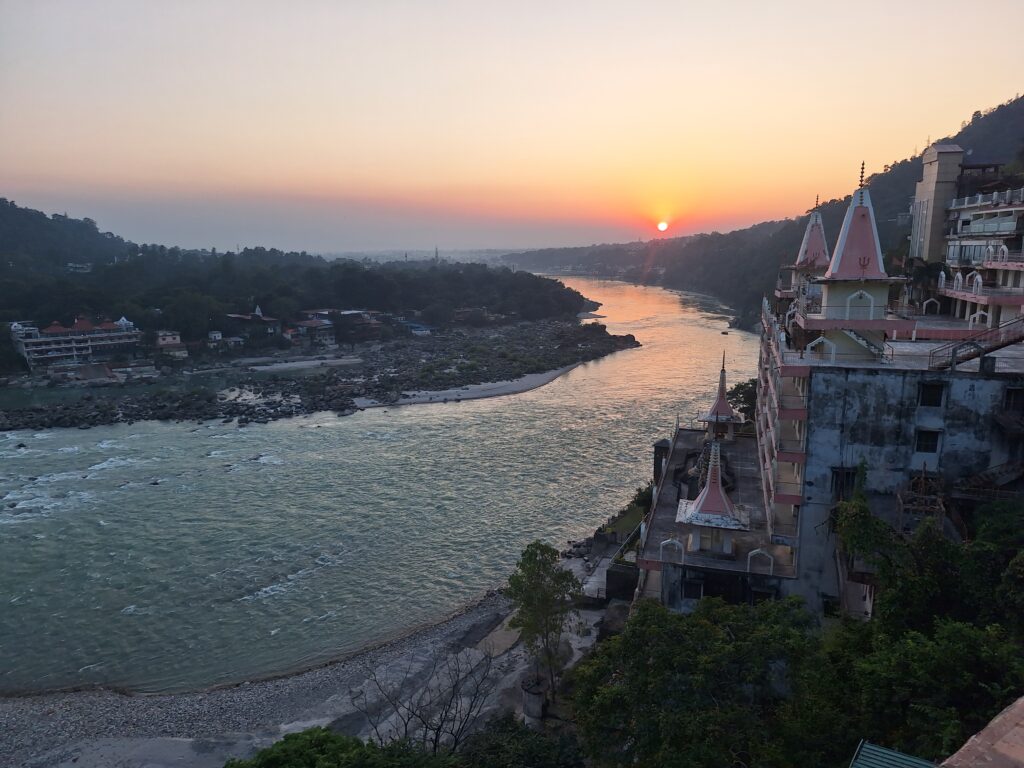
The Ganges River flows though the city, which was built into the steep hillsides on both sides of the water. The Ganges begins not too far away, slightly higher up in the mountains, and taking a bath in the holy river waters is a trip highlight, especially for Hindus. Rishikesh is said to be the spot where Lord Ram went to offer penance after killing the demon king Ravana in the Hindu epic The Ramayana. There are three bridges named after Ram, his wife Sita, and his brother Lakshman – Ram Jhula, Janki Jhula, and Lakshman Jhula (Laxman Jhula). Lakshman Jhula is currently being rebuilt after generations of foot traffic. We are staying in the quiet Upper Tapovan neighboorhood on the north end of the town.
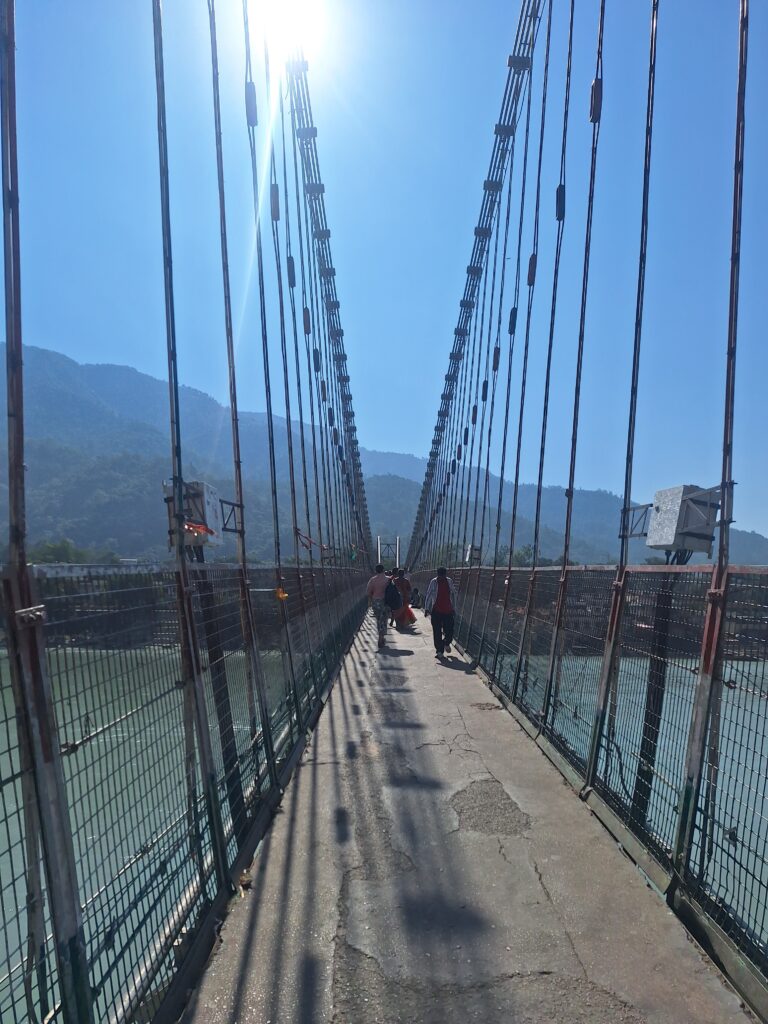
Walking through the different areas of Rishikesh town, you find nice bakeries and cafes, traditional restaurants and shops, and some temples and other cool things to explore. When you make your way down to the edges of the Ganges, you find all types of people meditating, doing yoga, performing Hindu rituals, bathing in the holy river, and sadhus (Hindu men who have given up normal life, and renounced possessions to live a spiritual life) smoking cannabis from orange chillums. The Sadhus, ascetic holy men who have renounced normal worldly lives, live very strange lives. They are often found by the river and are usually dressed in old orange robes, with painted faces and long dreadlocks. While alcohol and meat consumption are not allowed in the holy city, many of the sadhus consider marijuana to be a holy sacrament and use it liberally.
I have been interested in these sadhus for a long time. Actually seeing them in person was really interesting. I enjoyed looking into their eyes, as I found many different things. Some of their eyes were sad, some indifferent, some happy. Some eyes were more wild and alive than I have ever seen, as if they knew a great secret that I was failing to notice. There were a lot of them, some devoted to Krishna that greet you with an outstretched alms bowl and a “Hare om!” in hopes of a few rupees or a snack. Most of them don’t ask you for money, but if they do it isn’t pushy.
Many were followers of Shiva and were usually chanting “Om namah Shivaya” almost constantly in deep whispered voices. The ones we interacted with were mostly the city-type sadhus. Often the most devoted ones live further away from secular civilization in forests or caves. Some sects of sadhus choose to go through life without even clothes, as they see covering one’s body as a form of attachment.
Sometimes these sadhus do return to civilization, finding positions of service after attaining “moksha“, or liberation for themselves. At this point it is their duty to try to bring liberation to others, teaching what they have learned on the renunciate’s path. However, the life of the sadhu seems to not be an easy one for the body. Some do make it to old age, continuing along the path. Many die young from spending countless nights in the elements and constantly breathing in smoke from ceremonial fires and chillums of hashish.
Carrie and I contemplated these people. If we were born Indian, would we choose to partake in the endless capitalist hustle of trying to survive in a developing nation, or would we choose to leave all of that behind, having nothing but also needing nothing? The path of the ascetic almost seemed easier. It didn’t seem like you’d be hungry, as there is always a temple or ashram offering free meals to the holy men and poor people.
Walking around as foreigners, we are often greeted by passersby, “Hello! Where from?” Sometimes we engage with these people, sometimes not. You never really know their intentions at first. Some people want you to see their shop. Some people want to give you a ride. Some people just want to practice English or are really interested in whatever you are doing. Sometimes someone would just say “Come!” and commence on a tour of something that they thought was very interesting. Usually people expect a small tip. I gave people $1-5 if they were informative, honest, and seemed like they would use the money for good things. There were also times when people would refuse money, as they were performing the deed to honor a temple or a god or they just hoped you would have a good time in their country. You could always say no, but some of these impromptu tours have become some of our greatest memories in India.
On this day walking around Rishikesh I heard the standard, “Hello, where you from?” It was in a better English than usual. I turned to see a wild-looking sadhu staring at us. I stopped to engage him, as I had been wanting to speak with one of these mystical men. Usually they can’t speak good English or just don’t want anything to do with us. Before I knew it, this Baba, as the holy people are called, was pulling me into a big hug. He didn’t smell as bad as expected, his clothes being worn and tattered. “First time India?” He asked. I said yes and he said “Come, I give you one mantra.”
The three of us went down near the Mother Ganga and the Baba picked a spot along the wall. He opened up a large orange sheet covered in stains that he examined for a moment, trying to decide which side was cleaner. After choosing, he placed the sheet on the ground and gestured with his hand for us to sit down on top of it.
“You sit like this!” he said, eyes slightly bloodshot but very lucid. He showed great displeasure with my western hip tightness in Sukhasana, pointing at his very flat cross-legged seat and grunting disapprovingly at my best attempt. Soon he let that go and started in with the mantra. “Hare…..(he waited for us to repeat) aaaaaaaaauuuuuuuuummmmmmmmmmmmmmmmmmm namah shivaya” The “Om” lasted around 10 seconds. We did it once call and response then the three of us together repeated it 10-15 times.
“Repeat morning in shower, evening before bed!” the baba said as he started rummaging through his bag. He pulled out some take-away containers of food and then found a walnut in one of the side pockets. “Dry fruit,” he mumbled, placing it on the orange sheet and smashing it with his fist. We each had a small piece of the walnut and he looked around in his bag for other things. I asked him what town he was born in, but “NO PERSONAL QUESTIONS!” was his response.
At this moment an Indian tourist lady walked up to us and demanded to know, “How much you pay this Baba?!” I said nothing and then she and the sadhu started having a conversation in Hindi. It seemed she wanted to pay for a similar experience, immediately, on demand. The baba, however, was annoyed with the question and after several sentences with her came back to us in English. “Miiiiiiiiiiiiiiiind problem…” he grunted, gesturing towards the lady as she walked away, “Many people have….” We agreed that many people do indeed have mind problems, us included!
He pulled out a small white rock which he placed in my hand. “From Shiva temple…” he said. Then he went looking again and pulled out a rudraksha, a holy seed that is used to make traditional malas. “Open!” he said to Carrie, pointing at her hand. He was saying something about the seed being lucky for having children or something but then started examining the lines on Carrie’s palm. Apparently not seeing any children in her future, he apologized, “Oh um maybe next time then…” as he put the bead into Carrie’s hand. The cultural divide feeling huge, Carrie didn’t try to explain that we are child-free by choice!
He wanted to know how old we were, then demanded we guess how old he was. We started around 50 then he made us each guess three times. He was actually 45 years old, but it took us forever to get there, as his face was quite weathered. He then opened his hand and said “Now for baba!” I placed a small crystal mushroom in his hand that I had been carrying, which he seemed displeased by. I then gave him a little bit of money ($3-4) which he was also displeased with but soon got over it and believed me when I said it was all the cash I had. It was clear that our time was up and we said thank you and moved along.
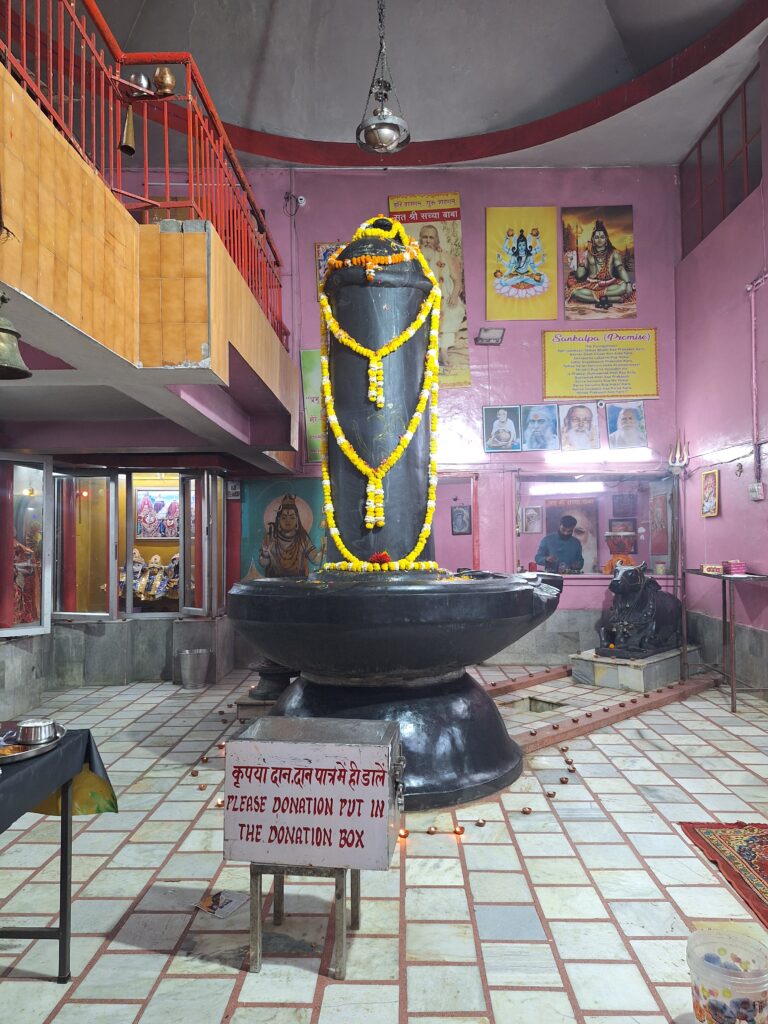
Shiva temple in Rishikesh
India is a place of great mystery that we have only just scratched the surface of. Rishikesh, although more touristy than other places we have been in India, is still quite interesting and full of things to see and learn. If you are into yoga, it is the place to dive deeper. It’s also a little easier here for western tourists as it’s a bit more peaceful and less intense than some other destinations in the north of India. However, if you only went to Rishikesh, you wouldn’t get anywhere close to full picture of this country. The layers of this place really are never ending and, although traveling in India can be very challenging, you do often feel very close to life, close to death, and close to something more that rests outside of the worldly cycle.
We travel to these places to learn how to better teach authentic yoga, not just a westernized version of yoga. Check out our retreats if this calls to you! We don’t host any retreats in India because we are not experts on India. However, please check out places like Rishikesh on your own when you have time and freedom, as travel can be a great path towards spiritual growth!
We arrived in Rishikesh, India, and are enjoying walking the streets, looking at what’s around, and doing some shopping. Rishikesh, known as the yoga center of the world, is full of all types of people on different paths of life. There are a lot of westerners here to attend yoga schools, and many Indian tourists from Delhi and other big cities who enjoy the more peaceful atmosphere of the Himalayan foothills. Carrie originally tried to do her yoga teacher training (YTT200) there in 2018, but it didn’t work out and she ended up doing the training in Sri Lanka instead.
The Ganges River flows though the city, which was built into the steep hillsides on both sides of the water. The Ganges begins not too far away, slightly higher up in the mountains, and taking a bath in the holy river waters is a trip highlight, especially for Hindus. Rishikesh is said to be the spot where Lord Ram went to offer penance after killing the demon king Ravana in the Hindu epic The Ramayana. There are three bridges named after Ram, his wife Sita, and his brother Lakshman – Ram Jhula, Janki Jhula, and Lakshman Jhula (Laxman Jhula). Lakshman Jhula is currently being rebuilt after generations of foot traffic. We are staying in the quiet Upper Tapovan neighboorhood on the north end of the town.
Walking through the different areas of Rishikesh town, you find nice bakeries and cafes, traditional restaurants and shops, and some temples and other cool things to explore. When you make your way down to the edges of the Ganges, you find all types of people meditating, doing yoga, performing Hindu rituals, bathing in the holy river, and sadhus (Hindu men who have given up normal life, and renounced possessions to live a spiritual life) smoking cannabis from orange chillums. The Sadhus, ascetic holy men who have renounced normal worldly lives, live very strange lives. They are often found by the river and are usually dressed in old orange robes, with painted faces and long dreadlocks. While alcohol and meat consumption are not allowed in the holy city, many of the sadhus consider marijuana to be a holy sacrament and use it liberally.
I have been interested in these sadhus for a long time. Actually seeing them in person was really interesting. I enjoyed looking into their eyes, as I found many different things. Some of their eyes were sad, some indifferent, some happy. Some eyes were more wild and alive than I have ever seen, as if they knew a great secret that I was failing to notice. There were a lot of them, some devoted to Krishna that greet you with an outstretched alms bowl and a “Hare om!” in hopes of a few rupees or a snack. Most of them don’t ask you for money, but if they do it isn’t pushy.
Many were followers of Shiva and were usually chanting “Om namah Shivaya” almost constantly in deep whispered voices. The ones we interacted with were mostly the city-type sadhus. Often the most devoted ones live further away from secular civilization in forests or caves. Some sects of sadhus choose to go through life without even clothes, as they see covering one’s body as a form of attachment.
Sometimes these sadhus do return to civilization, finding positions of service after attaining “moksha“, or liberation for themselves. At this point it is their duty to try to bring liberation to others, teaching what they have learned on the renunciate’s path. However, the life of the sadhu seems to not be an easy one for the body. Some do make it to old age, continuing along the path. Many die young from spending countless nights in the elements and constantly breathing in smoke from ceremonial fires and chillums of hashish.
Carrie and I contemplated these people. If we were born Indian, would we choose to partake in the endless capitalist hustle of trying to survive in a developing nation, or would we choose to leave all of that behind, having nothing but also needing nothing? The path of the ascetic almost seemed easier. It didn’t seem like you’d be hungry, as there is always a temple or ashram offering free meals to the holy men and poor people.
Walking around as foreigners, we are often greeted by passersby, “Hello! Where from?” Sometimes we engage with these people, sometimes not. You never really know their intentions at first. Some people want you to see their shop. Some people want to give you a ride. Some people just want to practice English or are really interested in whatever you are doing. Sometimes someone would just say “Come!” and commence on a tour of something that they thought was very interesting. Usually people expect a small tip. I gave people $1-5 if they were informative, honest, and seemed like they would use the money for good things. There were also times when people would refuse money, as they were performing the deed to honor a temple or a god or they just hoped you would have a good time in their country. You could always say no, but some of these impromptu tours have become some of our greatest memories in India.
On this day walking around Rishikesh I heard the standard, “Hello, where you from?” It was in a better English than usual. I turned to see a wild-looking sadhu staring at us. I stopped to engage him, as I had been wanting to speak with one of these mystical men. Usually they can’t speak good English or just don’t want anything to do with us. Before I knew it, this Baba, as the holy people are called, was pulling me into a big hug. He didn’t smell as bad as expected, his clothes being worn and tattered. “First time India?” He asked. I said yes and he said “Come, I give you one mantra.”
The three of us went down near the Mother Ganga and the Baba picked a spot along the wall. He opened up a large orange sheet covered in stains that he examined for a moment, trying to decide which side was cleaner. After choosing, he placed the sheet on the ground and gestured with his hand for us to sit down on top of it.
“You sit like this!” he said, eyes slightly bloodshot but very lucid. He showed great displeasure with my western hip tightness in Sukhasana, pointing at his very flat cross-legged seat and grunting disapprovingly at my best attempt. Soon he let that go and started in with the mantra. “Hare…..(he waited for us to repeat) aaaaaaaaauuuuuuuuummmmmmmmmmmmmmmmmmm namah shivaya” The “Om” lasted around 10 seconds. We did it once call and response then the three of us together repeated it 10-15 times.
“Repeat morning in shower, evening before bed!” the baba said as he started rummaging through his bag. He pulled out some take-away containers of food and then found a walnut in one of the side pockets. “Dry fruit,” he mumbled, placing it on the orange sheet and smashing it with his fist. We each had a small piece of the walnut and he looked around in his bag for other things. I asked him what town he was born in, but “NO PERSONAL QUESTIONS!” was his response.
At this moment an Indian tourist lady walked up to us and demanded to know, “How much you pay this Baba?!” I said nothing and then she and the sadhu started having a conversation in Hindi. It seemed she wanted to pay for a similar experience, immediately, on demand. The baba, however, was annoyed with the question and after several sentences with her came back to us in English. “Miiiiiiiiiiiiiiiind problem…” he grunted, gesturing towards the lady as she walked away, “Many people have….” We agreed that many people do indeed have mind problems, us included!
He pulled out a small white rock which he placed in my hand. “From Shiva temple…” he said. Then he went looking again and pulled out a rudraksha, a holy seed that is used to make traditional malas. “Open!” he said to Carrie, pointing at her hand. He was saying something about the seed being lucky for having children or something but then started examining the lines on Carrie’s palm. Apparently not seeing any children in her future, he apologized, “Oh um maybe next time then…” as he put the bead into Carrie’s hand. The cultural divide feeling huge, Carrie didn’t try to explain that we are child-free by choice!
He wanted to know how old we were, then demanded we guess how old he was. We started around 50 then he made us each guess three times. He was actually 45 years old, but it took us forever to get there, as his face was quite weathered. He then opened his hand and said “Now for baba!” I placed a small crystal mushroom in his hand that I had been carrying, which he seemed displeased by. I then gave him a little bit of money ($3-4) which he was also displeased with but soon got over it and believed me when I said it was all the cash I had. It was clear that our time was up and we said thank you and moved along.

Shiva temple in Rishikesh
India is a place of great mystery that we have only just scratched the surface of. Rishikesh, although more touristy than other places we have been in India, is still quite interesting and full of things to see and learn. If you are into yoga, it is the place to dive deeper. It’s also a little easier here for western tourists as it’s a bit more peaceful and less intense than some other destinations in the north of India. However, if you only went to Rishikesh, you wouldn’t get anywhere close to full picture of this country. The layers of this place really are never ending and, although traveling in India can be very challenging, you do often feel very close to life, close to death, and close to something more that rests outside of the worldly cycle.
We travel to these places to learn how to better teach authentic yoga, not just a westernized version of yoga. Check out our retreats if this calls to you! We don’t host any retreats in India because we are not experts on India. However, please check out places like Rishikesh on your own when you have time and freedom, as travel can be a great path towards spiritual growth!