
Varanasi, India – Where Hindus go to die
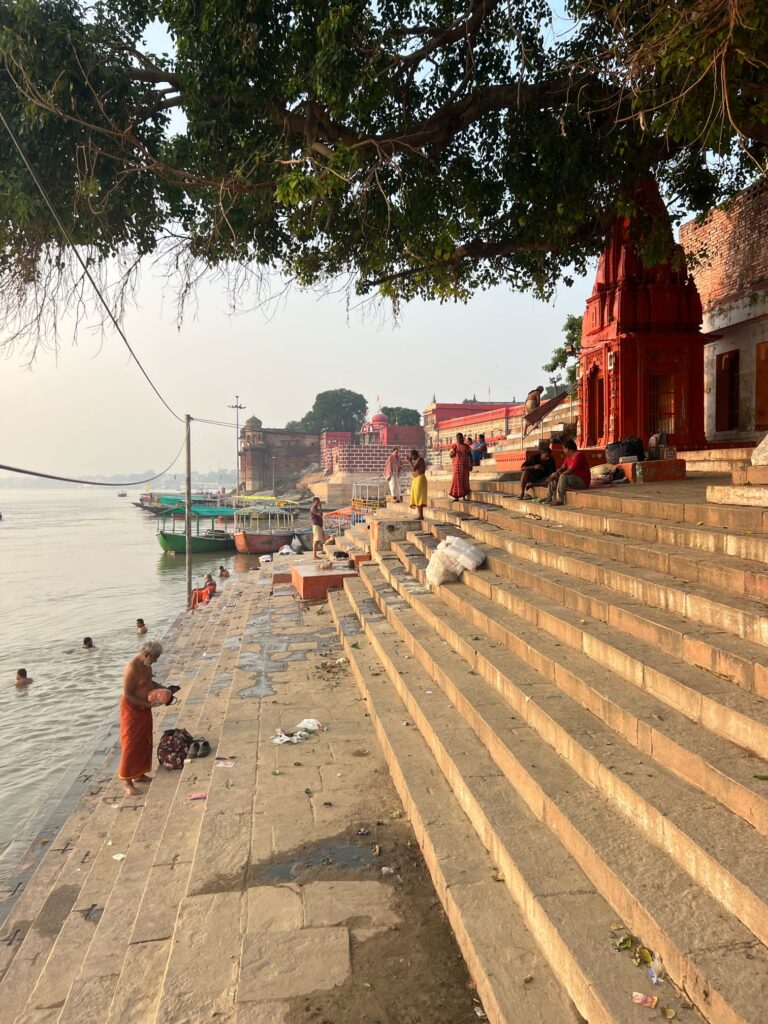
Varanasi, India – Where Hindu go to die
Varanasi, India, also known as Banaras or Kashi, is a large city in the north of India. It is the most holy city in India, especially for Hindus, and is known as the City of Temples or City of Death. For thousands of years the bodies of Hindu people have been cremated along the Ganges river.
Many people travel to Varanasi just to take a spiritual bath in the holy Ganges River. Carrie and I didn’t do it because of how many bodies are decomposing in the nearby waters. But that didn’t stop anyone else.
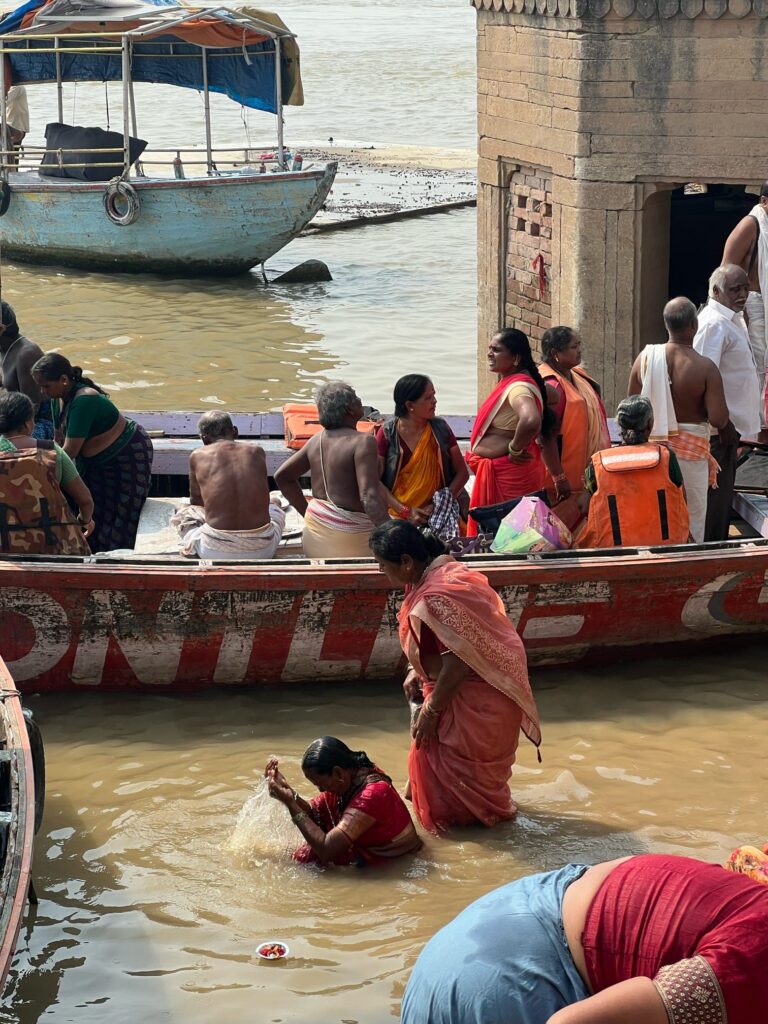
A sacred bath in the Ganges
There are upwards of 3,000 temples in Varanasi, and many families also have their own temple in their home. Temples can be very small (shoebox) or up to whole city blocks. Most of the temples are Hindu and there are temples for innumerable gods, the most popular by far being Shiva, the lord of destruction.
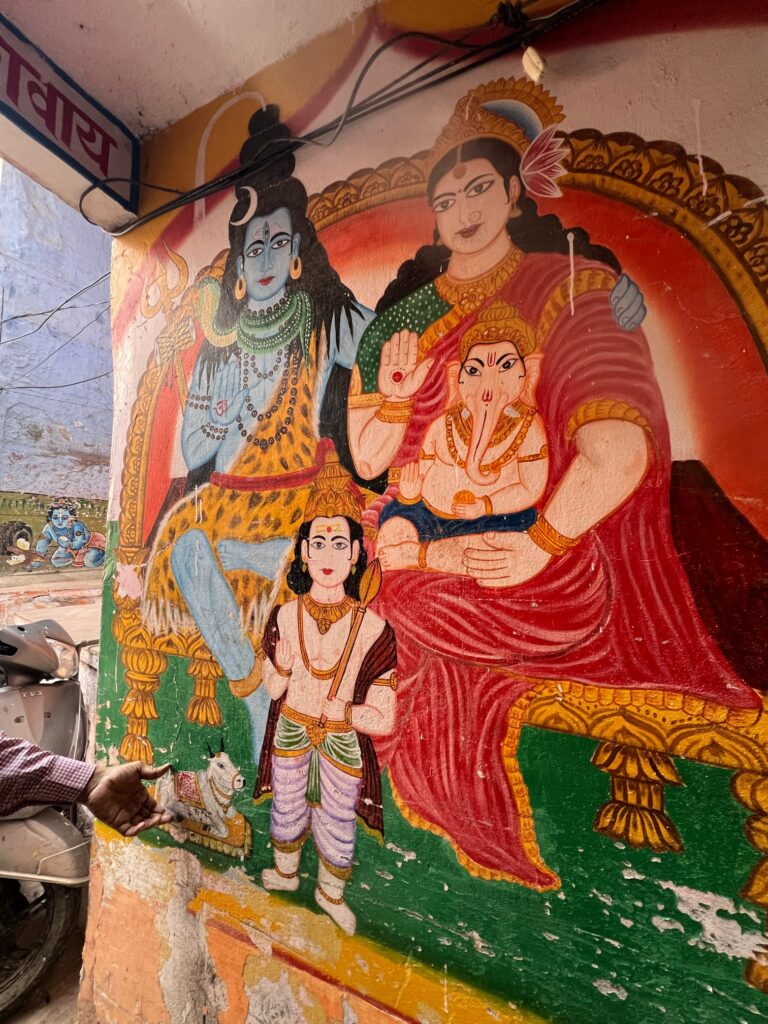
Shiva, Parvati, and their sons.
Shiva and Parvati’s connection
It is said that Shiva chose Kashi (the spiritual name of Varanasi) as his home and lived there with his wife Parvati. Shiva is everywhere in Varanasi, with his trident adorning city flags, and the name Rudra (one of the names of Shiva) on top of many of the taller buildings.
Usually Shiva temples have a central lingam representing Shiva, the masculine, which rests on top of the yoni, the feminine, which represents Shakti (Parvati). Shiva and Shakti remain in divine union in the form of the lingam and yoni and offerings (which can be many things) are poured over them. You can get little versions of these lingam statues (like a key chain) or the world’s tallest is 126 feet tall. There are some lingams that have been worshiped since 3,000 BCE and the tradition is much older than that.
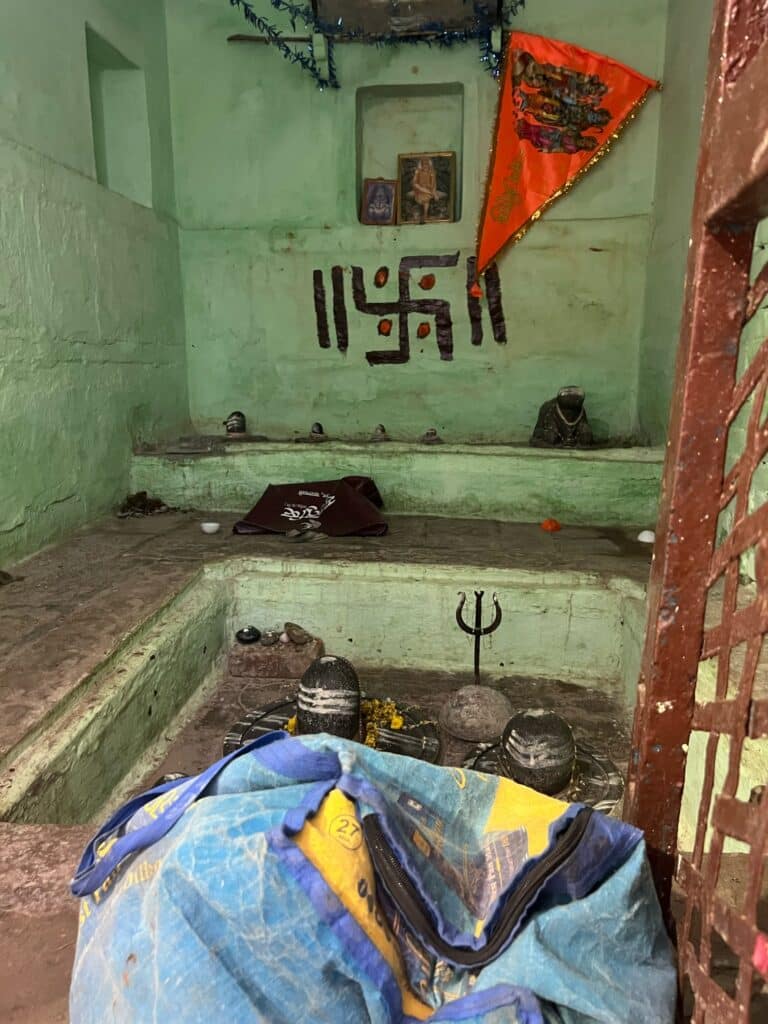
A small Shiva temple. The swastika has been a symbol of peace for thousands of years before the Nazi’s stole it.
Varanasi is home to “death houses” which are free hospice hotels where people can stay while waiting to die. They can stay a few weeks or longer, drinking the holy Ganges River water and taking holy basil until their disease finally takes them. We toured one of these houses on a walking tour of the city. Some people recover and return home. Others are happy to die there and be cremated along the river as they believe it to purify their soul for the next lifetime, or possibly even liberate them from the cycle of life and death. While people are waiting to die they are surrounded by priests or priestesses who are continuously performing Hindu rituals, caring for the dying, and chanting sacred mantras.
The Ghats of Varanasi
The ghats of Varanasi are stairways and patios where you can access the Ganges River. Some of the ghats in Varanasi have boat parking, some have temples, some have vendors selling food and many are good places to take a swim. We didn’t swim in the sacred waters of Varanasi because the water is not very clean there. Besides all the sewage that drains directly into the river, often un-cremated bodies are dumped directly into the water.
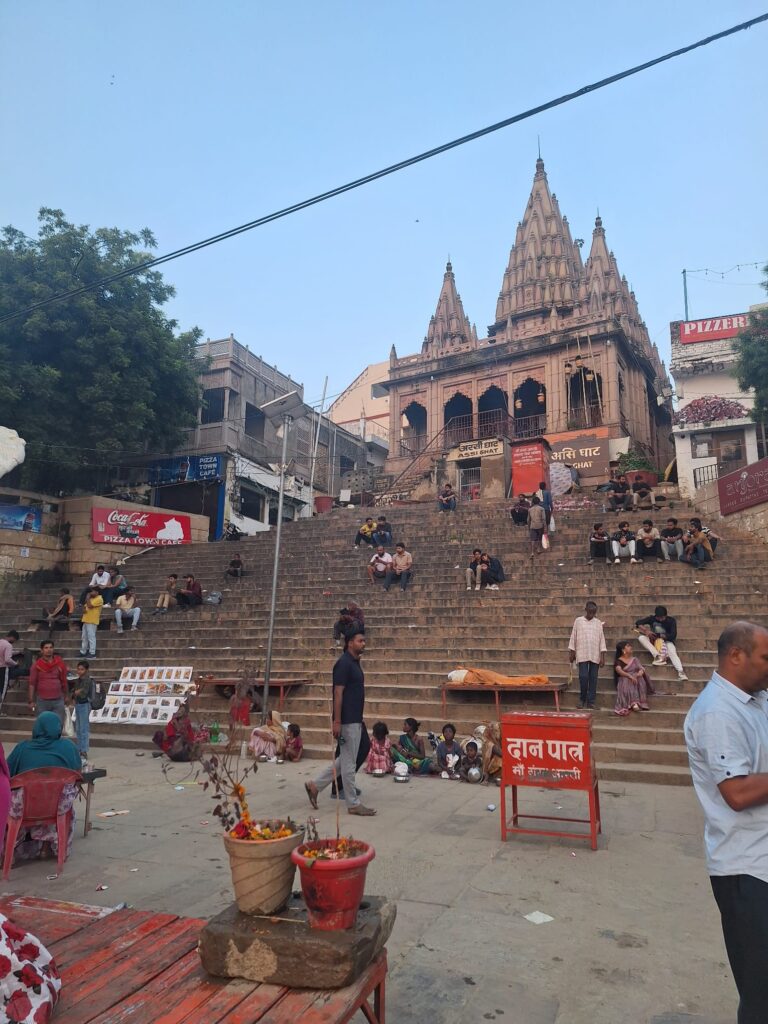
Manikarnika Ghat – The Burning Ghat of Varanasi, the most holy Hindu cremation site
The burning ghats of Varanasi are the most holy sites for cremations in India, maybe the world. When Hindus die, they need to be cremated within 24 hours as no preservative is put into the body. Many people come to Varanasi to wait for death as they believe they will instantly be enlightened by dying in the sacred city. Others are driven in on trucks after they have died. The family comes along and once at the river they negotiate a price for the wood and all the ceremonial items necessary for the Hindu cremation ritual. The whole thing costs generally between 10k-15k Rupees (~$100-$200) and uses around 300kg of wood. After the payment is made, the body is taken down in the river to be washed by the family in the sacred waters. The body is then placed near the top of a hip-high wood pile. The oldest son of the deceased usually lights the cremation fire by first igniting some grasses with the eternal fire burning there. This fire is always burning and has never stopped burning in thousands of years. It was supposedly started by Shiva eons ago.
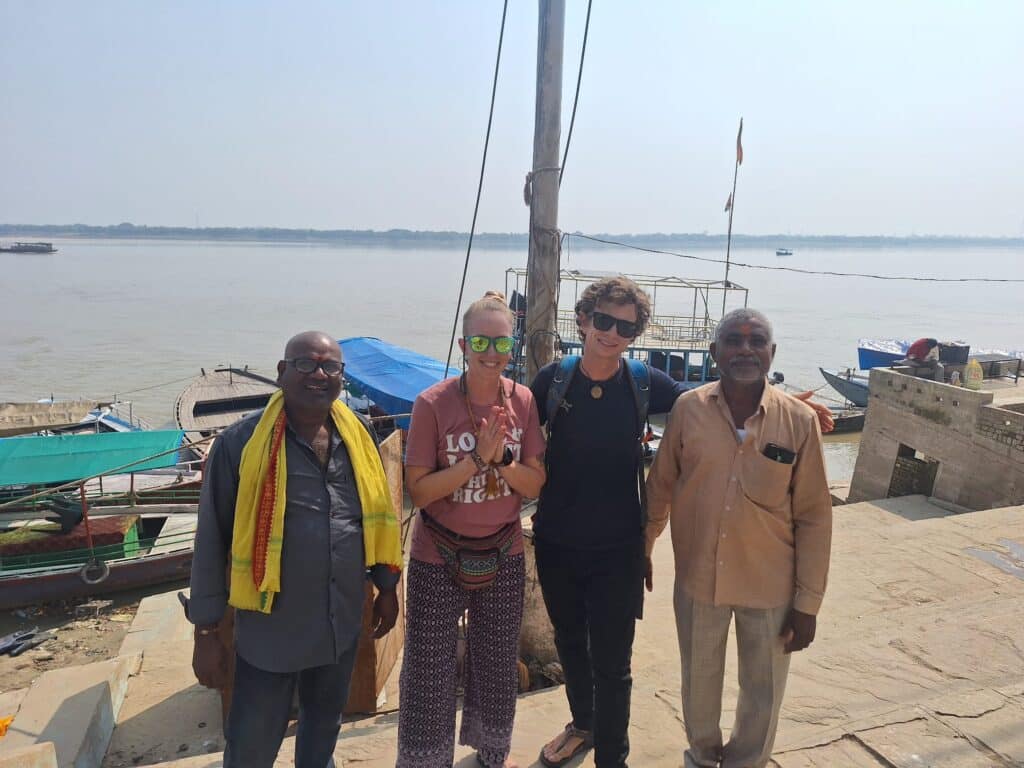
People always want a picture with the foreigners. Sometimes we say yes.
Not everyone needs to be cremated to purify themselves before the next life. Young children, holy men, pregnant women, snake bite victims, and people with leprosy apparently don’t need to be burned. Their bodies get tied up with rocks and sunk directly into the river.
When we arrived with our guide there was one body ready to be washed in the river, two or three in various stages of cremation, and one that was ready for the fire to be started. Women from the family are generally not allowed at cremations “because they cry too much” and you are not supposed to grieve during the ceremony or after. The mood is very neutral, not happy or sad, seeming just like casual daily business. I felt strong feelings by being there as it was very special to be able to witness something so sacred to so many. We were shown the eternal fire and a thumb print of its ashes was placed onto our foreheads before we left.
You are not supposed to take pictures at the burning ghat. But you can find them online in other places.
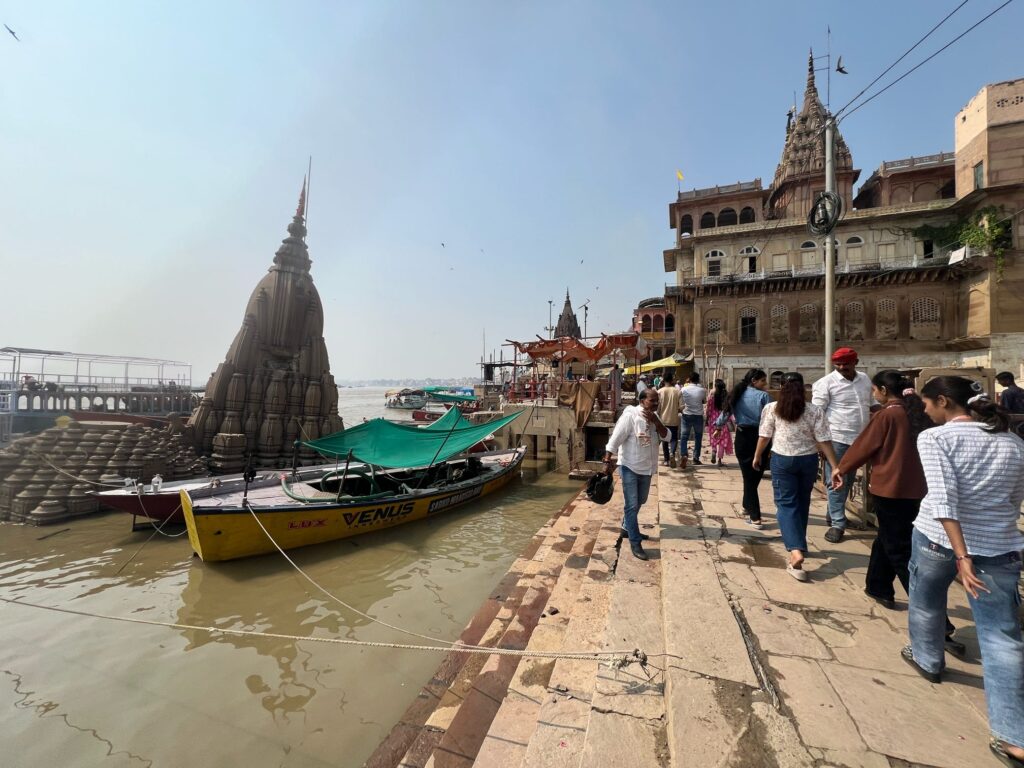
There are many Aghoris in Varanasi, a sect of Sadhu ascetics who hang out and meditate in in the burning ghat. They believe that the divine is everywhere and look to find divinity in disgusting or repulsive places. They are known to meditate on top of dead bodies and cover themselves in the ashes of the dead. I think in the west we always try to find a beautiful, quiet spot to meditate. While I don’t think I will ever meditate on top of a corpse, I now see it as a huge privilege to have so many quiet places in the west where we can find stillness. Most people in the world don’t have access to that, with many people sharing space with huge families, constantly bombarded with noise pollution from the streets outside. Finding stillness in these places is the real practice, and one that I still struggle with.
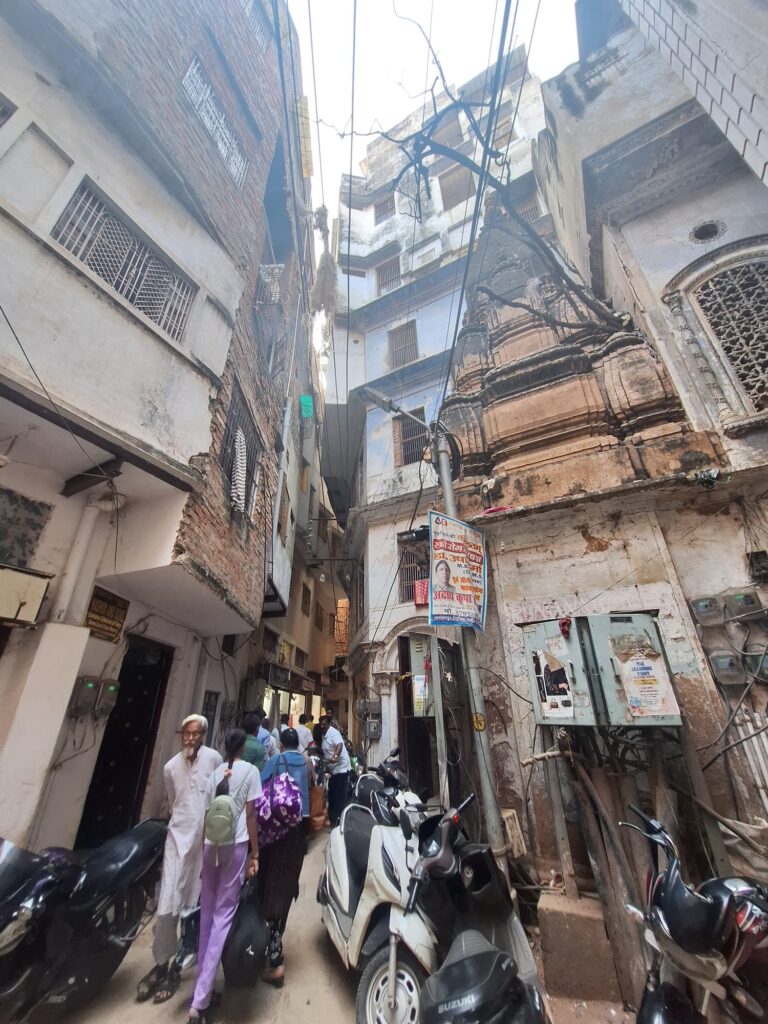
The connection to Hanuman
The city also has a strong connection to the Hindu monkey god Hanuman. Tusidas, the Hindu saint and poet, supposedly wrote the Hanuman Chalisa and Ramchatismanas in one of Varanasi’s ghats. Carrie and I really enjoy the Hanuman Chalisa and always stop to admire his image or learn more about him. Jai Hanuman!
The layers of the city are never ending, however every day was EXHAUSTING because of the crazy energy of the place. We did as much as we could every day, but certainly didn’t see everything. There were some good places to eat. We enjoyed the Mona Lisa Cafe, which seemed to be where we usually ended up when we were hungry.
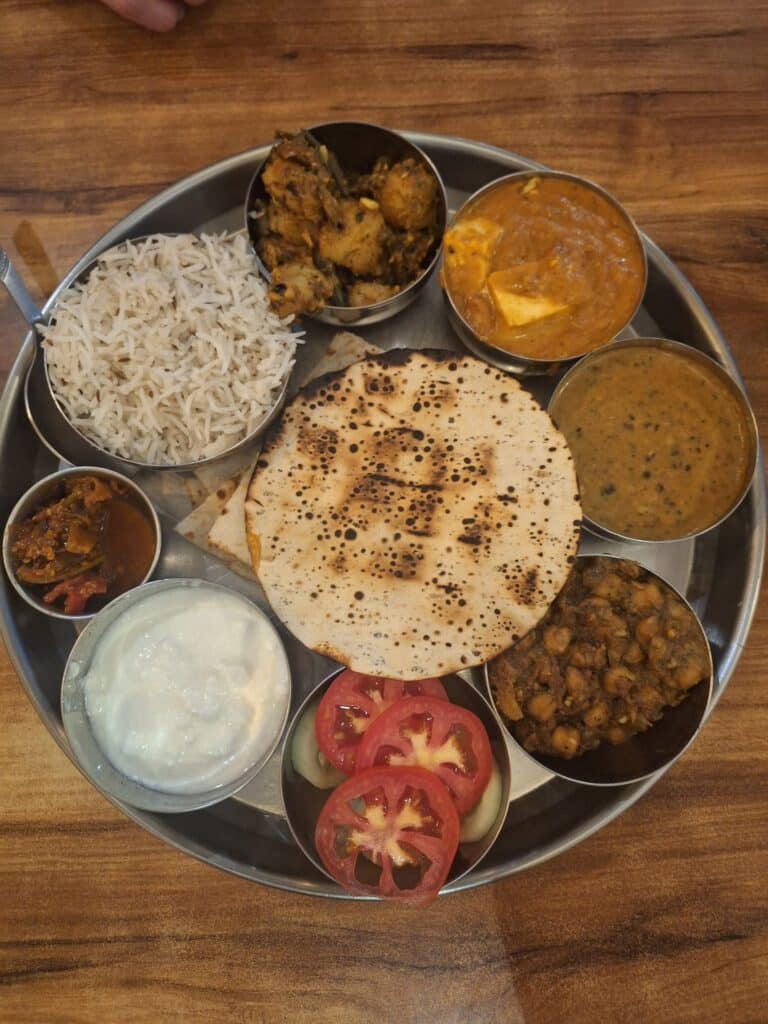
Mona Lisa Cafe
Traveling in Varanasi, India is a powerful experience.
It’s not for the faint of heart. The crowded chaos and heavy spiritual energy of the city make traveling in Varanasi, India a challenging experience that can still be very rewarding. Our advice is to prepare mentally before arriving. While the city seemed pretty safe, the noise and traffic and energy of the place is overwhelming, even for experienced travelers. Don’t be afraid to pay for a guide to take you around, as this can be a great way to get to know the city a little deeper and help you to feel more comfortable exploring it later on your own. If we went back again I would probably do the boat ride. On the airplane out of India there was an older Canadian fellow next to us on the plane. He had recently been to Varanasi as well, and showed us his pictures from the boat rides. It seems as if most tourists took these boats in order to view the ghats from afar. While his pictures were very good, I couldn’t help but feel as if all of these tourist boats were doing not much more than spying from a safe distance. With their telephoto lenses they were able to take photos of the cremation grounds and other sacred sites that were not allowed from the shore.
My advice would be to take the boat ride, but also walk through the city and into the cremation ghats with a guide to explain the process to you. Feel the heat of the burning fires and place the ash of the eternal fire onto your forehead. Connect with this powerful energy and spend at least a few minutes thinking about death, or what leaving your body might be like. Death and the dying process is hidden from us in the western world. I believe this hiding away of the dead and dying perpetuates the fear of death, which makes it harder to live. I imagine death will be similar to what it was like before we were born. I think getting from here to there will be quite exciting, and probably not as painful as we fear.
One of our teachers in Guatemala says, “Rather than praying to live forever, pray for a good death”.